The marketing world is always changing. As 1905 New Media approaches its 120-year anniversary, we’ve learned how to adjust with it. From the printing press to digital platforms, we’ve seen it all. Now, we’re in the middle of a new revolution, this one powered by Artificial Intelligence (AI).
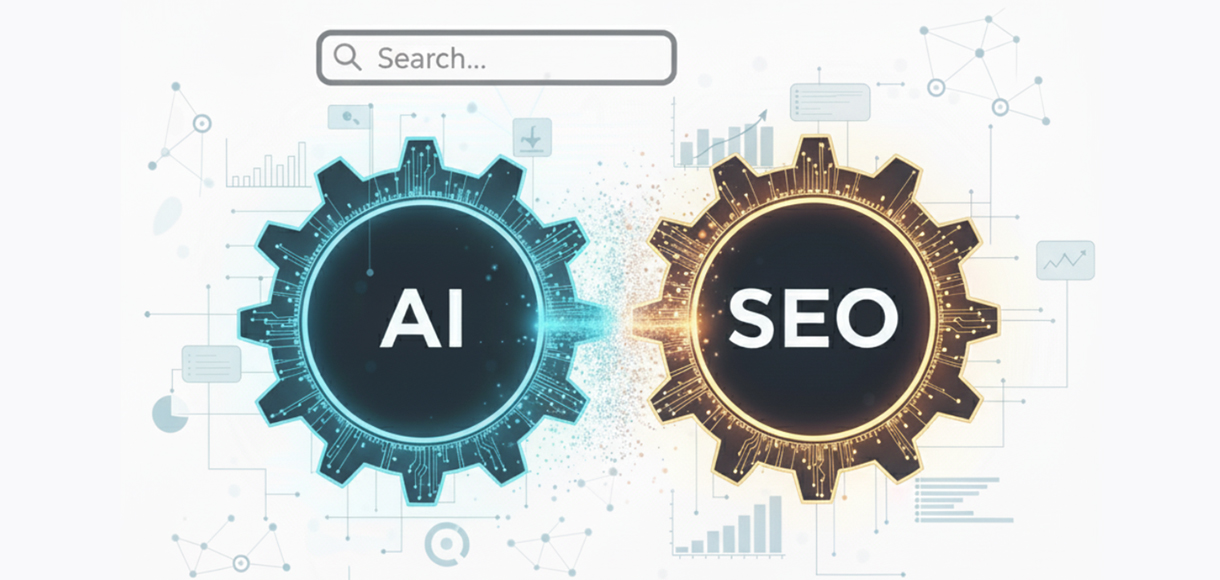
AI isn’t only a buzzword from a sci-fi movie anymore, it’s actively changing how your customers find you. For marketers and businesses, adapting is no longer optional. The old playbook of simple keyword strategies is collecting dust. The future is about understanding user intent, behavior and machine learning. This is where AI Optimization (AIO) steps in.
The Golden Age of SEO
For two decades, traditional SEO was a game-changer. Smart content and a sharp focus on keywords launched businesses to the top of search rankings, bringing in priceless organic traffic. But with the rise of AI-powered, zero-click search results, the rules are changing.
We saw this coming. At our 2024 Marketing Disrupted event, we predicted this exact shift. Now, it’s happening in real-time. Many search queries give answers directly on the results page, which means users don’t need to click through to your website.
A Wake-Up Call from Zero-Click Searches
In 2025, platforms like Google are all-in on AI-driven experiences like the Search Generative Experience (SGE). These features give users complete, summarized answers instantly. The result? Fewer clicks to your website. A recent SEMrush study found that in 2024, 25.6% of desktop searches and 17.3% of mobile searches were zero-click.
For businesses, this should be a wake-up call. Zero-click search is fundamentally changing how brands get discovered. Without a customized strategy, staying visible on search engines will feel like an uphill battle.
Why AI Optimization is Your Next Move
To keep your edge in this new landscape, it’s time to evolve from the familiar world of traditional SEO into the more dynamic practice of AIO. This isn’t just adding a few new tricks to your bag; it’s a fundamental shift in how you approach visibility online. Here’s a breakdown of what that evolution looks like:
- Content for AI Interpreters: Create clear, structured and easily digestible content. Your information must be optimized so AI can parse, summarize and feature it effectively.
- Performance-Driven Content: Use AI tools to analyze your content’s performance. This allows you to fine-tune your strategy for higher visibility in zero-click results.
- E-E-A-T Still Reigns: While AI models are the new gatekeepers, human credibility is everything. E-E-A-T (Experience, Expertise, Authoritativeness, and Trustworthiness) is the foundation of AIO, proving your authority.
- Conversational Search Readiness: People are asking questions, not just typing keywords. Your content should directly answer common questions with concise, clear information.
- Advanced Schema Markup: Implement structured data (like Schema.org markup) to help AI understand your content’s context. This is a non-negotiable for improving visibility in rich search results.
The Path Forward: How to Thrive in the AI-Driven Search Era
What does this shift actually mean for your day-to-day marketing? It means being more intentional and strategic than ever. If you’re ready to move from knowing to doing, here are three practical ways you can start adapting your strategy today:
#1. Integrate and Adapt, Don’t Abandon
Don’t throw out everything that’s worked for the last decade. Foundational SEO is still crucial. Things like ensuring your site has a healthy backlink profile, fast load times and a mobile-first design are prerequisites for success. AIO builds on top of this foundation.
Think of it this way: traditional SEO gets you in the game, but AIO helps you score in the new AI-driven environment. You still need technical SEO to ensure your site is crawlable, but you also need structured data to make sure it’s understandable to AI.
#2. Rethink Your Content Structure
AI-powered search loves clarity and scannable information. It’s looking for the quickest way to answer a user’s question. Instead of burying key information in dense paragraphs, break it out and:
- Use descriptive subheadings
- Create FAQ sections that directly address common queries
- Leverage bullet points and numbered lists
For example, a blog post about “The Best Hiking Trails” could include a quick-reference table at the top with columns for difficulty, length and key features. This makes it easy for both users and AI to pull the exact information they need.
#3. Become a Topical Authority, Not Just a Keyword Matcher.
In the past, you might have written one blog post to target one keyword. That approach is now outdated. AI prioritizes websites that demonstrate deep and comprehensive knowledge on a particular subject.
Instead of a single post, build a library. Create a central “pillar” page for a core topic (ex. “Beginner’s Guide to Digital Marketing”) and then surround it with a “cluster” of related articles that link back to it (ex. “What is SEO?”, “Social Media for Small Business,” “Intro to Email Campaigns”). This signals to search engines that you are a true expert and makes you a more trustworthy source for AI to cite.
Let’s Get Your SEO Strategy Ready for the Future
As 1905 New Media celebrates 120 years of guiding brands through every marketing revolution, we’re ready for what’s next. So, if your SEO strategy still looks like it’s from 2014, it’s time for a little heart-to-heart.
AI Optimization isn’t a “nice to have” — it’s the new cost of admission for staying relevant. It’s a necessity for any brand that wants to thrive, not just survive. At 1905 New Media, we’re already using these AI insights to guide our clients with our own AI-powered system, Kirk.
Feeling a little behind? Don’t worry, that’s what we’re here for. Reach out to the team at 1905 New Media, and let’s build a customized strategy that ensures your brand is visible, relevant and ready for the future of search.
Want to see what we predict next? Check out our Marketing Disrupted series!